Greaseproof paper vs parchment vs wax paper for restaurants
Greaseproof, parchment and wax paper all hold back grease, but only parchment is made for the oven. Which one to use for wraps, liners and baking.
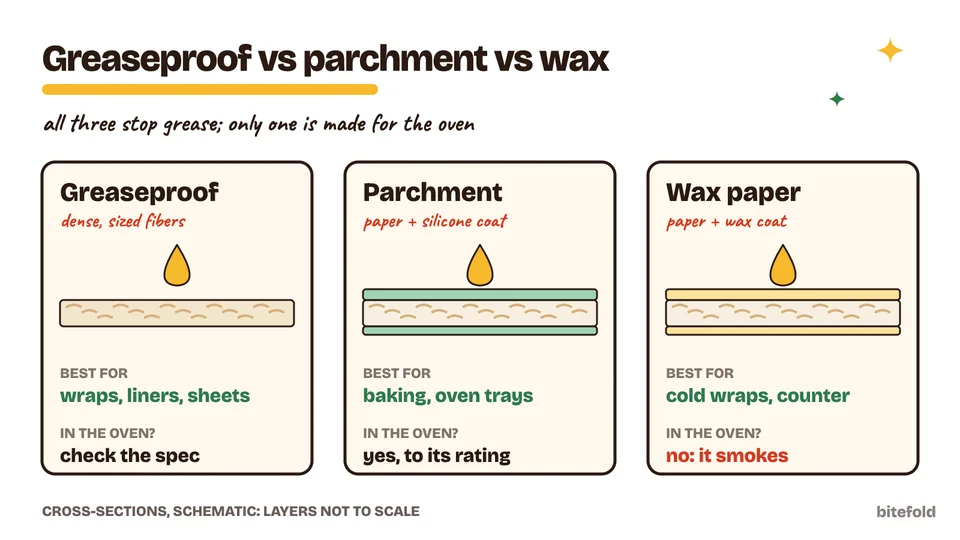
Greaseproof paper, parchment and wax paper all resist grease, but they get there differently. Greaseproof paper is a dense, treated sheet for wraps and liners. Parchment adds a release coating, usually silicone, and is the one made for the oven. Wax paper is coated with wax, so it is for cold wrapping and counter work, not baking.
What is greaseproof paper?
Greaseproof paper is a dense, smooth paper that grease does not soak through. Wikipedia's article on glassine, the family it belongs to, says greaseproof glassine "is impermeable to oil or grease and is normally used in cooking or food packaging." It is made by taking standard glassine and treating it "with starches, alginates, or carboxymethyl cellulose (CMC) in a size press to fill pores," with basis weights "usually 30–50 g/m2."
The same article notes that grease resistance is a measured property, using tests such as the Kit test (a TAPPI method), a turpentine test or ISO 16532. When you compare greaseproof papers from different makers, ask for the kit rating on the spec sheet instead of relying on the name.
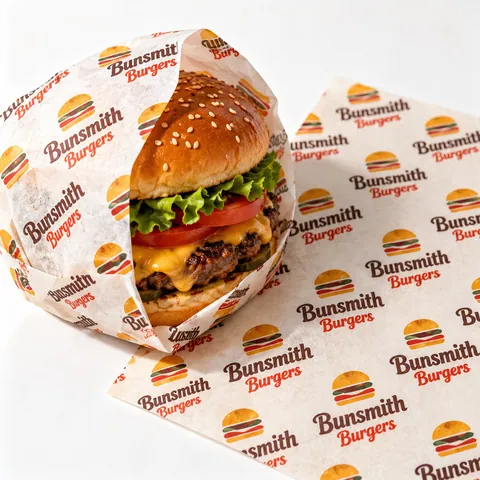
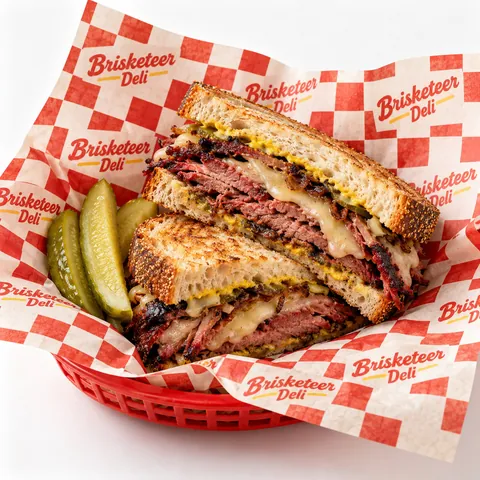
In a restaurant, greaseproof paper is the everyday sheet: burger wraps, basket and tray liners, fry cones, pastry bags and sheets between stacked items. It is a plain sheet with no wax or silicone on top, and it is the sheet we print for wraps and liners: our printed greaseproof paper is used for exactly these jobs.
What is parchment paper?
Parchment paper, also called baking paper, is a paper treated so it does not stick, resists grease and moisture, and handles heat. Wikipedia describes it as "greaseproof paper that can be used for several different applications," whose surface "prevents the food from sticking," and which is "highly heat-resistant with some brands capable of temperatures up to 420 °F (216 °C)."
That non-stick surface comes from one of two treatments, according to the same article: Quilon, a chromium-based solution, or a silicone coating. A German specialty paper maker, BRANOpac, writes that "silicone-coated baking paper is now the established standard in professional food production," and gives silicone-coated paper a heat resistance of "approx. 220–230 °C" (about 430–445 °F). It describes Quilon as "an older coating technology based on chromium complex compounds" that is "generally intended for single use only."
Every brand and grade has its own rating, so the number that counts is the one on the box or spec sheet of the paper you buy.
What is wax paper?
Wax paper is paper that has been coated with wax to keep moisture and grease in or out. Wikipedia defines it as "paper that has been made moisture-proof and grease-proof through the application of wax," and notes that paraffin largely replaced natural wax for this after the 1870s.
Its key limit is heat. The same article says wax paper "is not recommended for baking use in an oven, as it will smoke," and that "parchment paper is better for this use." The parchment article puts it the other way round: parchment "can be used in most applications that call for wax paper," but "the reverse is not true."
In a kitchen, wax paper is for cold work: wrapping sandwiches and cookies for storage, separating portions, and lining a counter while you roll or shape dough.
How do greaseproof, parchment and wax paper compare?
| Greaseproof | Parchment | Wax paper | |
|---|---|---|---|
| How it resists grease | Dense, sized fibers | Treated paper plus a release coat | Wax coating |
| In the oven | Check the spec | Yes, up to the paper's rating | No, it smokes |
| What we print | Printed wraps and liners | Not offered | Not offered |
| Typical restaurant use | Wraps, liners, sheets | Baking, sheet pans, en papillote | Cold wraps, counter work |
The table is a summary of the sources below; always check the spec sheet of the exact paper you buy.
Which paper should a restaurant use for what?
As a rule of thumb, match the paper to the hottest moment it will see and to whether a customer will see it.
- Wrapping burgers, sandwiches and wraps to go. Greaseproof paper. It holds back grease, folds tight and carries your print. If you want a heavier sheet for big sandwiches, look at deli paper.
- Lining baskets, trays and fry boats. Greaseproof paper, cut to the basket size. A printed liner puts your brand under the food.
- Baking cookies, pastries and sheet-pan dishes. Parchment. It is the one of the three that is made for oven heat.
- Wrapping cold items for storage or the pastry case. Wax paper or greaseproof paper. Wax paper is good at keeping moisture in; greaseproof paper is the one to choose if the wrap will be printed.
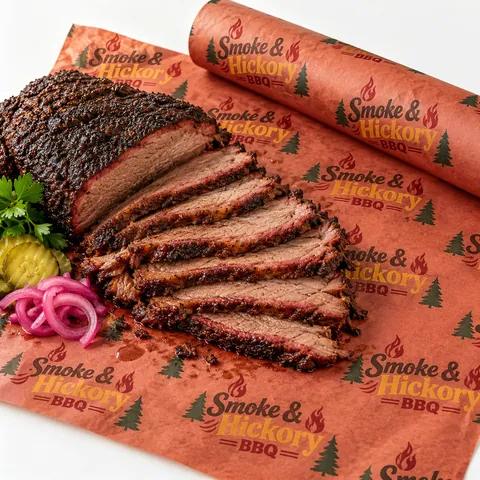
- Wrapping smoked meat and brisket. Neither: most barbecue kitchens use butcher paper, a heavier sheet built for that job.
Can greaseproof, parchment and wax paper be printed?
Greaseproof paper is the one we print, as wraps and liners, because those are the sheets customers see. Parchment and wax paper are kitchen tools first, and their coatings are made for release and moisture; we do not offer them printed.
If you are planning printed wraps or liners for a restaurant, a bakery or a food truck, start with the size of the basket or the item you wrap, then decide on one-color or full-color art. Every order comes with a free digital design and dieline, and a digital proof before printing. Send your sheet size and quantity on the quote form to get a quote.
FAQ
Is parchment paper the same as greaseproof paper?
Not quite. Parchment is a greaseproof paper with an added treatment, usually a silicone coating, that makes it non-stick and suited to the oven. Plain greaseproof paper resists grease but does not have that release coating.
Can wax paper go in the oven?
No. Wax paper is not recommended for baking in an oven because the wax will smoke. Use parchment paper for baking instead.
What is the best paper for wrapping burgers?
Greaseproof paper is the usual choice. It holds back grease, folds tightly around the burger, and can be printed, so the wrap can carry your brand.
What is a kit rating on greaseproof paper?
It is the result of the Kit test, one of the tests used to measure how well a paper resists grease. Compare it on the spec sheets of the papers you are choosing between, using the same test for each.
Sources
- Wikipedia, "Glassine" (section "Greaseproof paper"), read 9 Nov 2026: https://en.wikipedia.org/wiki/Glassine
- Wikipedia, "Parchment paper", read 9 Nov 2026: https://en.wikipedia.org/wiki/Parchment_paper
- Wikipedia, "Waxed paper", read 9 Nov 2026: https://en.wikipedia.org/wiki/Waxed_paper
- BRANOpac, "Silicone vs Quilon parchment papers" (updated 26 Feb 2026), read 9 Nov 2026: https://www.branopac.com/en/branopedia/s/silicone-vs-quilon-parchment-papers
Related pages
See your logo on it first
Send your logo and the item you need: we reply with a free digital design and a price, then a digital proof before anything prints.